


Canada |Former members of the Mission of the Holy Spirit beg government to act
Behind the scenes of a worrying Quebec religious movement
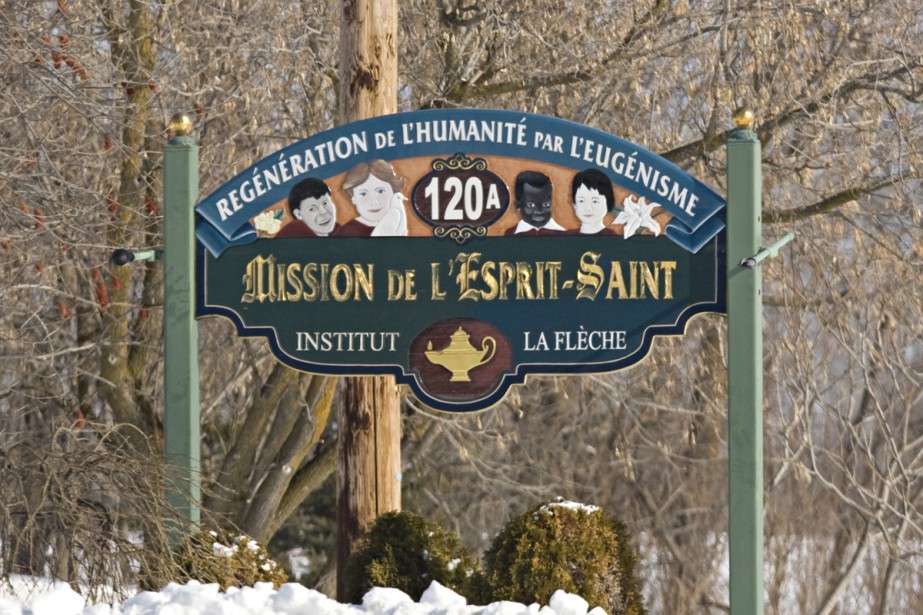
«Brainwashing» Under-educated children in private school, sexual assault. Years of life ruined...
Several ex-members of the Mission of the Holy Spirit say they came to this observation after leaving this religious movement with sectarian excesses a few years ago.
Isolated from society at birth and «raised with erroneous information», these people today describe the Mission of the Holy Spirit as a «prison», a «sect», even «brainwashing».
They are now urging the government of Quebec, in particular the Ministry of Education, to intervene.
Journalist and anchor of the Noovo Info 17 news bulletin, Marie-Christine Bergeron, collected their shocking stories as part of the documentary series “The Prison of the Holy Spirit”
And for the first time, a former high-ranking member of the movement breaks the silence and helps us better understand what is taught there.
The courage to speak
Formerly known under the first name of Laflèche in honor of the founder Eugène Richer known as Laflèche, Félix Morin does not mince his words when he lists the numerous problems that have persisted within the movement since the beginning of the 20th century.
«It is a religious organization that is harmful to its members. Its history is littered with broken lives and families,» says Félix Morin, who nevertheless dedicated a long chapter of his life as a servant of the MES.
«I wasted a lot of time of my life for nothing. A part of my life was annihilated and shattered.»
Young women also give, openly, moving testimonies illustrating a reality resembling that of «the 1950s».
We talk about isolation, marriages at 16, questionable teachings in schools, large tithes, lies about the «outside world», threats, etc.
Women who have had the courage to speak out say they have been repeatedly beaten by their parents. Some of them say they were sexually abused by relatives when they were minors.
Mila-Rose and Laura say they abandoned everything before turning 18 to escape a life that was «predestined» for them in the eyes of the Mission: becoming a stay-at-home mother, having several children, without having the chance to obtain a diploma.
«Everything that came from outside was downright Satan. At 6 years old, we were told that we were going to be a mother,» says a woman named Richère, the first member of her family to have left the Mission.
_____
«Since I left, they believe I will be reincarnated as vermin.»
Cristelle, a former member of the Mission of the Holy Spirit
_____
Richère adds that members of the Mission already warned her that she was going to lose custody of her children when she turned to a CLSC to treat depression.
We must «have children until our bodies no longer allow it,» adds Félix Morin, who decided to reveal the reasons for his departure to the community before leaving the Mission for the sake of his offspring.
Félix has also created a website illustrating the «truths of the Mission of the Holy Spirit».
Why are so many former members denouncing the movement? What is the Mission of the Holy Spirit? What are these beliefs? The documentary series The Prison of the Holy Spirit lifts the veil on this controversial religious group.
What is the Mission of the Holy Spirit
Founded around 1913 by former Montreal police officer Eugène Richer known as Laflèche, the Mission of the Holy Spirit is said to be based on eugenics – the search for improving the human population by controlling reproduction. Its objective: to create the perfect human thanks to work extended over several generations and the knowledge of Eugène Richer, explains Marie-Andrée Pelland, president of Info-Secte.
«They want to bring God to Earth through children who have no sin. They want to eradicate the sins of the flesh over the generations,» says Théo, a former member who decided to denounce what he experienced in a Mission establishment, located in Saint-Paul, in Lanaudière.
Running away to stop being beaten: testimonies
From her adolescence, Mila-Rose wrote in her diary that she doubted the reality depicted by the Mission of the Holy Spirit:
«Since I was young, I have wanted to leave the Mission, because I know that it is not reality. I envied the children who approached their parents without fearing that they would hit them.»
Laura, one of Mila-Rose's cousins, exhumes similar memories.
«For us, it was normal to get beaten. Once, when I was 7, my father hit me so hard that my butt was purple. I couldn’t sit down.»
«The brothers were learning their sexuality from the rest of us. They showed us “porn” and crossed each other while watching us. […] When I told my mother that my brother had shown me his penis, she hit me and told me not to tell anyone.»
In an interview in The Prison of the Holy Spirit, Cristelle, who is a mother, cannot hold back her tears when looking back on her old life.
«When you leave [the movement] at 25, when you have six children and you didn’t go to school… you wonder who you are,» says Cristelle, a tremor in her voice.
The question of education
Over the years, the Mission would have divided into several factions without certain members being aware. Théo admits that he did not know of the existence of other establishments located in Montreal, Lavaltrie and Anjou.
The tenth child in a family of 11, Théo did like Félix Morin: he left the community five years ago in order to ensure a better future for his children, to whom he wants to provide a suitable education.
He is also asking for help from the Legault government.
«Please, Minister of Education, help these young people,» begs Theo.
Noovo Info visited the Académie de la Vallée du Roy, a private school belonging to the Mission de l’Esprit-Saint de Lavaltrie, to try to see what it is. On site, the school maintains that it holds a permit from the Ministry of Education, without completely dissociating itself from the movement.
«We do what the Ministry asks,» we assure.
But former members repeat ad nauseam that they did not receive an education allowing them to interact with the «outside world» and that «children are still being taught controversial values in 2024».
The planets would not exist and the universe «would be empty» for the Mission of the Holy Spirit, according to the stories of Félix, Théo, Mila-Rose and Laura.
____
«They distort your thinking until you think like them.»
Mila-Rose, former member of the Mission of the Holy Spirit
_____
«The Sun is the reflection of the flames of hell, that’s what we are taught,» reveals Félix Morin.
Mila-Rose remembers learning that «the Earth is made of a pear and that it is not round» during her childhood.
Y enseigne-t-on ces informations aux enfants à l’Académie de la Vallée du Roy?
«On n’est pas la même branche», répond une représentante de l’établissement.
De son côté, le ministère de l’Éducation confirme avoir octroyé un permis à l’Académie de la Vallée-du-Roy.
Par écrit, le ministère explique que puisque l’établissement respecte les critères administratifs et que le ministère effectue des interventions pour surveiller les enseignements, la Mission de l’Esprit-Saint a le droit de tenir cette école.
Le ministère de l’Éducation a toutefois refusé une demande d’entrevue, à l’instar des établissements de la Mission de l’Esprit-Saint d’Anjou, de Saint-Paul et de Lavaltrie.
Au final, pourquoi chercherait-on à contrôler l’enseignement?
«L’un des fondements d’un groupe sectaire, c’est le contrôle des connaissances pour éviter la confrontation des idées», souligne Mme Pelland.
Donner 10% de ses revenus à la Mission
Outre ce qui concerne le permis du ministère de l’Éducation, la Mission bénéficie également des avantages fiscaux des organisations religieuses au Québec et au Canada, explique le professeur agréé à la Faculté de droit de l’Université de Sherbrooke, Luc Grenon.
Les lieux de culte bénéficient de plusieurs avantages en vertu de la loi provinciale, mentionne M. Grenon:
Remettre des reçus pour dons de bienfaisance («Indirectement, ça permet un meilleur financement aux organisations religieuses», note M. Grenon);
Remboursement de 50% de TPS et de TVQ sur leurs achats;
Statut d’organisme sans but lucratif. («On ne paie pas d’impôts sur ses revenus et sur les dons qu’ils reçoivent», dit M. Grenon);
Exemption de taxes municipales et scolaires pour les organisations religieuses.
«C’est l’équivalent d’obtenir des subventions», dit le professeur. «Autant au fédéral qu’au provincial, on subventionne la religion. L’Union des municipalités du Québec s’est-elle réunie pour demander ça au gouvernement dans le contexte de la laïcité?»
Au-delà de ces avantages gouvernementaux, il serait exigé aux membres de verser 10% de tous leurs revenus, héritage ou cadeaux en dîme à la Mission afin de remercier Dieu.
«T’as peur de ne pas payer ta dîme, car il va t’arriver des châtiments. Dieu va te punir», raconte Théo.
«On te disait: “si tu ne payes pas, ne sois pas surprise si ton enfant tombe malade”», se souvient Cristelle.
Un haut placé de la Mission de l’Esprit-Saint défend le mouvement
Lors du tournage de La prison de l’Esprit-Saint, Théo, accompagné de Marie-Christine Bergeron, est revenu en avril dernier sur les lieux où il a grandi et passé la majorité de ses dimanches. C’est à ce moment qu’un orateur est sorti de l’établissement pour confronter la journaliste de Noovo Info et son caméraman.
Il a demandé de ne pas filmer l’établissement lors de leur célébration annuelle: le Jour du Pardon.
Mme Bergeron a décidé de poser plusieurs questions au serviteur, notamment en se basant sur les témoignages recueillis.
«Pensez-vous qu’on oblige le monde comme si on était une criss de secte?» a-t-il répondu.
Un segment de la série documentaire montre l’orateur vanter les mérites de l’école à la maison et montrer du doigt les écoles publiques, qui sont contre «leurs valeurs», car on y «encourage les gens à avoir le vaccin et à ne pas avoir d’enfants».
Questionné sur les femmes obligées de se marier à 16 ans, l’homme ajoute qu’il s’agit d’une mauvaise compréhension des choses.
« Pourquoi c’est un problème si l’homme est sérieux et prend soin de sa femme? On ne change pas un enseignement de même.»
À ses yeux, une femme au foyer occupe le plus grand rôle au sein d’une famille.
«Il ne faut pas que les gens qui nous enseignent soient des femmes. C’est impossible, car ça a toujours été comme ça…»
Un vide
Ayant eu la force de quitter ce mouvement et de commencer une nouvelle vie, Mila-Rose et Laura disent éprouver un énorme vide malgré tout. Elles ont dû sacrifier leur famille. Richère a dû couper les ponts avec les siens pendant neuf ans après avoir quitté la Mission.
«Je suis bien entourée, mais j’ai de la difficulté à être heureuse. Il me semble que ça me ferait du bien d’avoir un câlin de ma mère», confie Mila-Rose, aujourd’hui âgée de 18 ans.
Après avoir quitté la Mission, Laura se rappelle avoir perdu «tous ses repères».Ses parents auraient coupé le contact avec elle. Il y a quelques années, son père lui aurait dit «qu’elle n’existait plus pour eux».
«J’ai toujours une rancune envers eux. Je vois des gens qui ont leurs parents, et j’aurais juste voulu ma mère auprès de moi pour me dire que ça va aller. Et je n’ai pas eu le droit d’avoir ça», a conclu Laura en sanglotant.
Mila-Rose voit tout de même le verre à moitié plein.
«J’ai traversé le plus dur. Je suis partagée. Je suis bien, mais je ressens encore mon vide.»
Primevideo réalisé par Isabelle Tincler.